For a long time, the path to the customer seemed clear: Companies developed a product, ran ads, and built their brand over the years. Brand awareness led to trust—and trust led to purchasing decisions.
This logic is undergoing a fundamental shift.
As the latest McKinsey report, *State of the Consumer*, shows, consumer behavior is undergoing a profound transformation. Today, purchasing decisions are no longer influenced solely by brand messages, but by a complex interplay of social media, product experiences, independent reviews, communities, and, increasingly, artificial intelligence.
People are doing more research than ever before. They compare products, read reviews, seek recommendations on Reddit or YouTube, and rely on AI assistants to help them find alternatives or evaluate ingredients. The traditional marketing funnel has evolved into a dynamic decision-making process in which companies can no longer fully control their messages.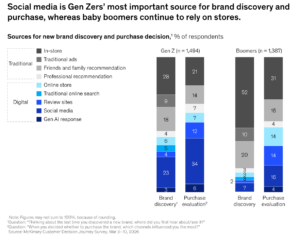
At the same time, the concept of beauty—in the context of health—has also changed. Today, consumers no longer wait until symptoms appear before making a purchase. Prevention, sleep, mental health, nutrition, longevity, and well-being are becoming key drivers of purchasing decisions—far beyond the scope of traditional medicine. Products are increasingly evaluated based on the genuine contribution they make to a healthier and better life.
Added to this is a sustained rise in price awareness. Even target groups with high purchasing power now ask more specific questions about a product’s actual added value. It’s less about the lowest price and more about the conviction that quality, benefit, and credibility justify the price.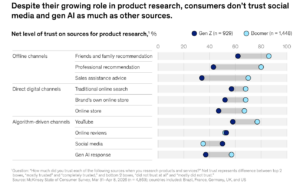
All these developments lead to a crucial consequence: Trust is no longer built through reach or advertising pressure. It must be continually earned anew.
For companies, this means a shift in perspective. In the future, successful brands will not merely sell products or services. They will provide guidance in a complex world. They will communicate transparently, back up their claims with scientific evidence, build credible relationships, and develop an identity that wins people over in the long term.
Brand awareness, economies of scale, and traditional distribution are no longer enough. Competitive advantages are increasingly derived from how well companies position themselves in fragmented, AI-driven ecosystems, tailor their portfolios to specific health and value needs, and create experiences that truly build brand meaning.
Especially in the fields of Conscious Beauty, Health Tech, and MedTech, trust is thus becoming the true competitive advantage. Those who credibly communicate the benefits an innovation brings to people’s lives will be more successful in the long run than those with the largest advertising budgets.
The future does not belong to the loudest brands. It belongs to the most credible ones.