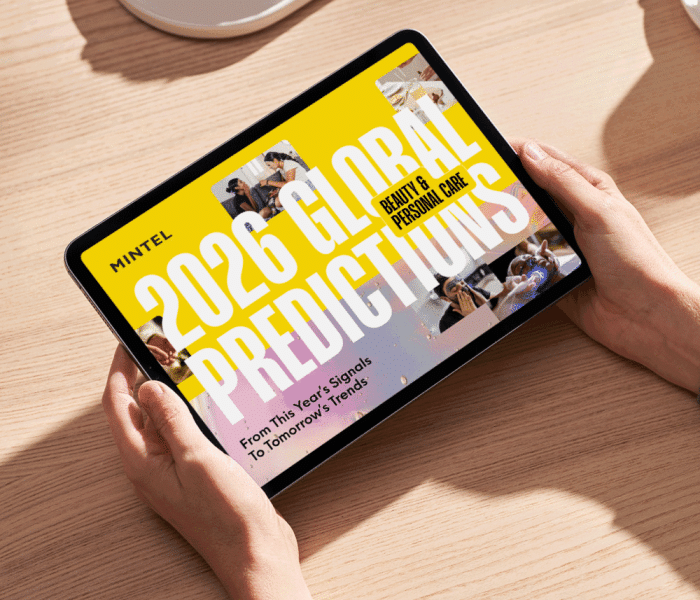
Global consumer behavior is entering a new era: Consumers are seeking products and experiences that deliver not just function, but emotional resonance, ethical alignment, and sensory satisfaction. According to Mintel’s 2026 predictions, by 2030, consumers will expect beauty and home care products to not only enhance appearance or function, but to act as diagnostic, emotional, and preventative tools.
New data from Mintel’s 2026 Global Consumer Predictions, 2026 Global Household Predictions, 2026 Global Food & Drink Predictions, and 2026 Global Beauty & Personal Care Predictions offer a glimpse into the future of consumer and commerce.
Key Takeaways:
- Mintel predicts consumers will want emotional, ethical, and sensory value beyond function in 2026.
- Consumers of food, beauty, and home are investing in rituals that feel emotionally aligned.
- Authentic, human-centered brands will define the rest of the decade.
Beauty Predictions
Mintel identifies a trio of major shifts in beauty, including metabolic beauty converging health, technology, and personalization. The market intelligence agency also predicts a reframing of skin and hair as visible biomarkers of overall health, with products increasingly incorporating biointelligent technologies, continuous metabolic monitoring, and cellular repair tools. With emotional wellness rising up the agenda, beauty will become a multisensory exercise, and functional fragrances, immersive textures, and even virtual reality experiences will become part of self-care routines. Products will be judged on their ability to regulate mood and evoke emotion.
Regional Beauty Habits & Predictions
- 86% of Indian adults agree that a healthy diet plays an equally important role as beauty products in enhancing beauty.
- 78% of Brazilian adults agree that beauty brands should provide more scientific evidence to validate the claims they make.
- 70% of Spanish adults agree that beauty supplements are an effective way to slow the visible signs of aging.
- 76% of Beauty and Personal Care (BPC) product users in China say that how their skin feels, when thinking about product texture, impacts their user experience, and 75% link texture to perceived efficacy.
- 37% of Ayurvedic skincare buyers in India are willing to pay more for products offering sensory effects like cooling or warming (vs. 27% overall).
- 15% of online beauty shoppers in the UK say that “playzones” to try new products independently would encourage them to shop in-store, rising to 22% among Gen-Z.
- 37% of US consumers cite an appealing fragrance as most important when shopping for bodycare.
- 36% of German facial skincare users believe that if a focal skincare product causes noticeable sensation on the skin, it means it is working.
- 51% of Chinese adults say unique locations are a key factor in attracting them to pop-up events. Further, 42% say social or interactive experiences would attract them.
- 76% of Chinese beauty consumers would like brands to tell them when a BPC product has been made using AI.
- 76% of US adults agree that technology tools should always be supplemented by the availability of human support.
- 82% of UK adults who know about/have heard about AI would prefer to speak to a human customer service representative instead of an AI chatbot.
- 70% of those under age 45 in the UK say AI makes them value things made by humans more.
Future Online Trends
- Black Swan Data predicts clinically proven and science-backed skincare will trend in the next 12 months, according to a rise in mentions on online conversations.
- NAD+ and biohacking will trend in the next 12-24 months, according to a rise in mentions in online conversations.
- The fragrance trend is predicted to climb in the next 12 months in fragrances that improve the mood, with it being mentioned in 2,235 online conversations (a growth of 39%).
Demand for beauty is being driven by the boredom of highly optimized aesthetics; instead, consumers desire beauty that feels human. Brands that display makers, processes, and flaws are positioned to win trust. For beauty brands, this means shifting from simply delivering visible results to providing insights, emotional uplift, and a sense of connection. Serums, supplements, and devices will double as wellness diagnostics by 2030.
Full Report >>
Source: BeautyMatter